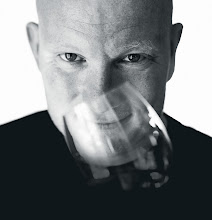
Her own Marcassin Vineyard was planted in 1991. At that time Helen Turley and her husband John Wetlaufer planted 3.45 hectares of Chardonnay and Pinot Noir at the property with undeveloped land they had bought out close to Jenner out in the true Sonoma Coast in 1985.
The first wines under the Marcassin Vineyard label was made in 1990, but at that time they they only used grapes purchased from vineyards owned by the Martinelli family and by Jess Jackson, and since the Marcassin Vineyard selection was added, that vineyard has been planted with more vines several times, and now covers almost 16 hectares.
Their own vineyard is located on at around 340-400 meters on a slope close to the clusters of vineyards owned by Flowers Vineyards, Pahlmeyer, Peter Michael Winery and not too far away from Hirsch Vineyard. It shares a combination of cool breezes from the Pacific and the warmer temperatures at the higher elevation.
Helen Turley says that it's not important for a wine to be able to keep well in the cellars, and to her ageing does not always make a wine better of more complex. However, I have often noticed that I'm not too impressed by her wines when young, since I find them to be a bit closed, earthy and tannic, even with a little too much influence of the oak. Compared to others pinots of the same reputation (e.g. those from Williams Selyem, Hirsch Vineyard, Rochioli), they lack perfumes and floral notes. The Marcassin wines are quite different, they offer deeper and in one way more complex flavors, they seems to be more rustic and well structured in a Vosne-Romanée-like way.
This tasting with almost ten year old wines, showed a quite different experience than I have had from tasting her younger wines over the years. Now, when the wines has come to age, the tannic structure is softer, the acidity is still fresh, and hand in hand with the more seductive secondary aromas that has developed, there's still a beautiful fruitiness in them. I must say I was totally impressed by some of these wines, and the verdict based on this tasting is that the pinots from good vintages should be kept at least 8-10 years. None of these wines were fully matured, and they all developed well in the glasses during the hour we had them there!
2002 Pinot Noir Three Sisters Vineyard / 91-92 p
Color is pale cherry red with some yellowish nuances of maturity. Of the four this is the most elegant, also the lightest although it still offers a good depth, but not as open as the others. At almost ten years of age, there's still a lot of primary red fruit aromas, and really no signs of maturation, and it's quite complex. On the palate it's almost medium bodied, very elegant and fresh with a fine and almost silky tannic structure, still it's a bit closed as the finish, which is totally dry and fresh, is not as long and open as in the others. The alcohol is a bit warm, unfortunately, and that's the main reason for not mistaking this wine from coming from Burgundy.
I would serve this at around 15 degrees Celsius, normally in a Burgundy shapes glass, but if you feel the alcohol warmth, you may well pour it in a Bordeaux shaped glass, that would help a bit.
Drink it 2012-2016
2002 Pinot Noir Bondi Home Ranch / 94 p
Color in this wine, as in all four, is identical to that of the Three Sisters Vineyard. It offers a deeper and a bit more intense strawberry fruit aromas, quite similar to what can be found in great wines from Gevrey-Chambertin, as well as some earthy and complex note. Compared to the Three Sister Vineyard bottling, it's just a bit more open. On the palate, it's medium bodied, quite rich and elegant with the same burgundian red fruit qualities, a lively acidity and some mineral notes, as well as a bit more firm tannic structure than in the previous wine. Again, there's bit earthiness and, which I really like, that sweet touch of raspberries and strawberries so often found in the best premier crus and even grand crus of Gevrey-Chambertin. Serve it at 15 degrees Celsius in a Burgundy glass. As for the others, I prefer to aerate it at least 30 minutes in a decanter prior to serving it.
Drink it 2012-2018
2002 Pinot Noir Blue Slide Ridge / 94 p
I really like the perfumes of this wine, it's more vibrant, intense, sweetish and at the same time with a lovely note of sour cherries, and it also offers some floral qualities that add complexity. Overall, the impression is that this site is cooler than the others, and the overall balance it just beautiful. On the palate it's more silky the previous two wines, most likely because it higher density, which also gives the impression there's more concentration and richer fruit here. I find the tannins be more or less at the same level as in the others, which gives a dry taste rather than a firm structure, as in the others, the acidity is lively and fresh. Again, the alcohol is a bit warm in the finish, but I don't really find it to be too negative. Overall, the balance is just fine and with food, which is the right way to serve these wines, the warm sensation of the alcohol will be totally incorporated. Serve it in the same way as the others.
Drink it 2012-2018
2002 Pinot Noir Marcassin Vineyard / 95 p
If the other wines are the premier crus of Marcassin, this offers the concentration and depths worthy a classification of grand cru. It's not only more powerful and rich, it's also a bit more refined and elegant. It offers layers of sweet raspberries and strawberries as well as dark red roses and just a touch of earthiness and I have to say this is delicious. This is not the most concentrated of the quartet, but it is for sure the most structured wine. Tannins are still evident and keeps the intense fruit in a second position, although you for sure will notice the intensity of it. Dark cherries, ripe raspberries and strawberries are to be found here, but there's also a earthy and quite spicy quality that adds a certain complexity. The finish is quite long, but marked by the tannins and also a slight bitterness, which I guess will soften with another year or so in the bottle. One thing that strikes me with this wine, and the quartet in general, is that their flavors are more intense than their taste. To me, that's a positive thing. Far too many pinots are overly sweet and lush. Compared to what's found in Burgundy, if one even should make a comparison, is that most of the best wines in Burgundy are built on aromas and structure, and less on taste and sweetness. So I guess one could use the term "burgundy like here". But it took several years for this particular wine to reach that stage!
Drink it 2012-2020